The Innovation Culture Where Smart Failure Wins
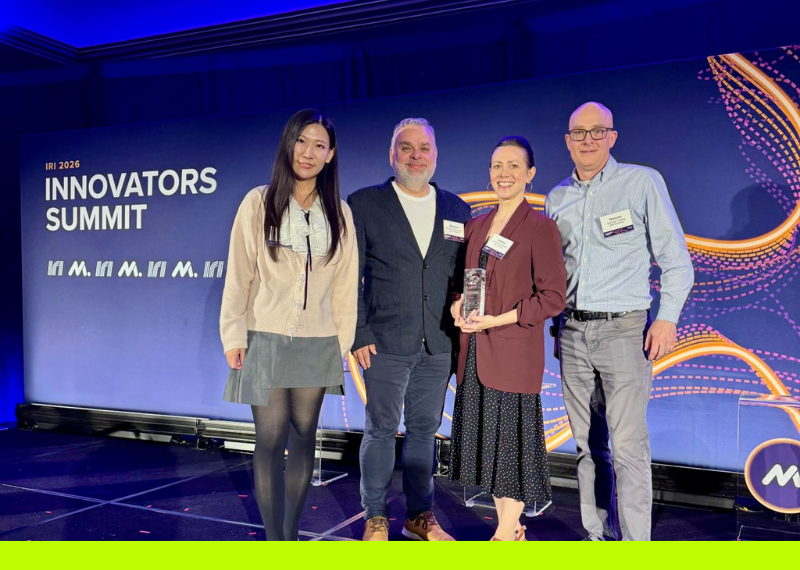
In the semiconductor industry, where development cycles are costly and uncertainty is constant, Qnity has learned that innovation doesn’t come from getting it right the first time—it comes from learning faster than anyone else.Supply chain volatility, rising demand for AI, and growing speed-to-market pressure require a culture that can navigate industry complexity, test new ideas, and learn quickly.
For us, innovation is both a company value and a mindset we bring to our work every day. We expect innovation to show up in the questions we ask and the ideas we explore. That commitment helps us better understand what the industry needs today and what it will take to shape the future of electronics in the years ahead.
Our approach to innovation was recently recognized by the Innovation Research Interchange (IRI), the innovation division of the National Association of Manufacturers, when Qnity Electronics was named a co-winner with DuPont for the 2026 IRI Innovation Excellence Award for Outstanding Innovative Culture.
This award honors companies that create the conditions for innovation to thrive, including empowered teams, inclusive workplaces, and exemplary leadership behaviors and systems. For Qnity, this recognition reflects our belief that innovation happens when people feel connected and supported enough to explore bold ideas and act with confidence, especially in uncertainty.

At Qnity,
innovation is
a daily mindset
empowering
our teams to
learn fast,
embrace uncertainty,
and drive the
breakthroughs that
earned us the
2026 IRI Innovation
Excellence Award.
“The IRI Innovation Excellence Award is especially meaningful because it recognizes not only what our teams create, but how they create it together. We are building a culture where curiosity is encouraged, smart risks are supported, and every lesson learned helps us move forward,” said Randal King, Senior Vice President and Chief Technology Officer at Qnity.
Building a culture where innovation can scale
Innovation is something we work hard to make accessible to everyone. Whether someone is in a technical or nontechnical role, just starting their career, or leading a team, we want every employee to have clear pathways to contribute ideas and grow.
A cornerstone of this culture is the Lean Innovation Mindset and Methodology, a custom-built framework designed to help teams navigate high-uncertainty growth opportunities. Lean Innovation enables teams to identify their riskiest assumptions, design rapid experiments, and make evidence-based decisions to persist, pivot, or pause.
With more than 300 trained employees across Qnity and DuPont, dedicated internal coaches, and extensive digital learning portals, Lean Innovation gives teams a common language, practical tools, and the confidence to move forward. The approach reflects a broader companywide shift that rewards a “learn-it-all” mindset rather than “know-it-all” thinking. We’ve found that focusing only on correctness or delivery milestones isn’t nuanced enough to reward true innovation. Instead, our teams can focus on rapid learning, curiosity, humility, and continuous improvement.
Among our major growth initiatives that have applied the Lean Innovation methodology, 31% have actively pivoted, and 43% have been shelved. These decisions are not failures but rather help us strengthen our portfolio, free up resources, and keep teams focused on the opportunities with the greatest potential.
300+
trained employess
31%
actively pivoted
43%
shelved to focus resources
The Importance of Celebrating Failed Projects
Taking it a step beyond the Lean Innovation methodology, employees must feel safe taking risks and sharing uncertainty with each other for innovation to thrive. Qnity fosters that environment through deliberate rituals, leadership behaviors, and built-in guardrails that make smart risk-taking possible.
One of clearest signals of this mindset is Dead Projects Day, an annual event that helps normalize and celebrate failure as learning. Dead Projects Day destigmatizes risk through vulnerable narratives shared across functions and career levels. The event embraces humor, costumes, pop culture, and open dialogue to create a welcoming environment. When our employees see senior technical leaders share their failures and lessons learned, it makes it easier for others to do the same.
That spirit is reinforced throughout Qnity’s innovation ecosystem, which is volunteer-driven and culturally ingrained. Programs like Innovation TechCon, the grassroots Emerging Innovation Network, and the Lean Innovation Learning Lab create spaces for employees to connect across functions, share best practices, and learn from one another.
At Qnity,
we celebrate learning
over perfection
empowering teams to
take smart risks,
learn from failure, and
innovate with confidence.
Guardrails that help teams take smart risks
While we always welcome bold ideas, that’s only one piece of the innovation puzzle. We also want to give teams the structure to test those ideas thoughtfully. One of our most effective tools is the Learning Plan, which helps teams test assumptions quickly and in a cost-effective way. Learning Plans help teams ask the right questions, design thoughtful experiments, and determine what needs to be true for an idea to advance.
Additionally, managers and leaders are trained in Lean Innovation so they can ask better questions and manage early innovation projects differently from more mature, lower-uncertainty work. Executives and technical leaders also play a critical role. They routinely model growth-mindset behaviors, encourage teams to discontinue lower-potential work transparently, and reinforce that the right decision is the evidence-based one, not the most convenient or comforting. Together, these elements create a climate where teams feel empowered to explore bold ideas without fear of retribution.
“Great innovation cultures do not remove uncertainty, but rather help people move through it with clarity and confidence,” said John Singer, chief operations and engineering officer at Qnity. “Our teams are using Lean Innovation, Learning Plans, and cross-functional collaboration to learn faster, reduce risk earlier, and stay closely connected to customer needs.”
Innovation powered by people
Qnity’s innovation culture is successful precisely because it combines mindset, method, and, most importantly, community. Our employees build skills in design thinking, experimentation, customer insights, and cross-functional collaboration.
Our “two-in-the-box” business and technical project leadership model increases this cross-functional collaboration and accelerates market-relevant decision-making. Additionally, our portfolio governance processes bring together diverse contributors from multiple functions. For Qnity, innovation is not reserved for one team, one discipline, or one moment in time. We view innovation as one of our most important shared responsibilities and opportunities.
The 2026 IRI Innovation Excellence Award is a proud moment for Qnity and reinforces our commitment to keep building a culture of curiosity. Qnity will continue investing in the systems, behaviors, and communities that help employees learn faster, collaborate across boundaries, and turn insights into meaningful action.
At Qnity,
Innovation
is a
team sport.
We’re here to help.
We love to talk about how our electronics solutions can build business, commercialize products,
and solve the challenges of our time.